
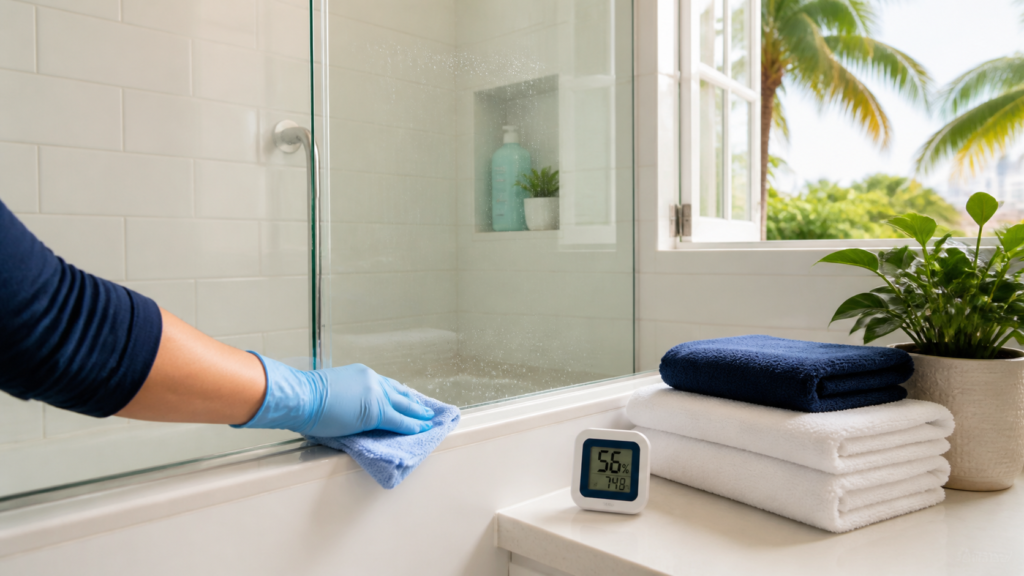
Miami’s heat and humidity create ideal conditions for mold — often within days, not weeks, if moisture is left unchecked. Unlike drier climates where mold is mostly a seasonal concern, South Florida homes deal with the risk year-round. Here’s where mold hides, the humidity science behind why it grows so fast here, practical prevention steps, and when it’s time to call in a professional.
Why Miami Homes Are So Prone to Mold
Mold needs three things to grow: moisture, warmth, and a food source (organic material like drywall, wood, grout, or dust). Miami-Dade provides all three nearly year-round — average humidity regularly sits above 70%, and indoor temperatures stay warm even with air conditioning running. The EPA recommends keeping indoor relative humidity between 30% and 50%, and no higher than 60%, to keep mold growth in check. In a Miami home, hitting that target usually takes active management, not just running the AC and hoping for the best.
Air conditioning helps by removing moisture from the air, but poorly maintained AC systems, clogged drain lines, or units that are oversized for the space can actually make humidity problems worse by cycling on and off too quickly to properly dehumidify.
Where Mold Hides Most in Your Home
- Bathroom caulking, grout lines, and behind shower curtains
- Under sinks and around plumbing fixtures
- Air conditioning vents, drip pans, and drain lines
- Window sills and tracks where condensation collects
- Closets and cabinets with poor air circulation
- Behind furniture pushed against exterior walls
- Washing machine drums and gaskets
8 Ways to Prevent Mold and Mildew
- Keep indoor humidity between 30-50%. A simple hygrometer (under $15) tells you exactly where your home stands — don’t guess.
- Run exhaust fans during and after showers. Leave them on for 15-20 minutes after to clear lingering moisture.
- Fix leaks immediately. Even a slow drip under a sink can feed mold growth within 24-48 hours.
- Maintain your AC system. Change filters monthly and have drain lines cleared regularly to prevent backups and excess humidity.
- Improve air circulation. Leave space between furniture and walls, and crack closet doors periodically.
- Use a dehumidifier in problem areas. Bathrooms without windows and interior closets often need extra help beyond central AC.
- Dry wet items immediately. Towels, bath mats, and swimsuits left damp are common mold sources.
- Clean regularly with mold-inhibiting products. Routine cleaning of bathrooms and kitchens removes the organic buildup mold needs to take hold.
Signs You Already Have a Mold Problem
Mold isn’t always visible right away. Watch for a persistent musty smell, especially in closets or bathrooms even after cleaning. Discoloration on walls, ceilings, or grout — often black, green, or brown spots — is a clear sign. Some households also notice an uptick in allergy-like symptoms (sneezing, congestion, or eye irritation) that improve when away from the house. If you notice any of these, it’s worth investigating further rather than waiting for it to visibly spread.
Prevention vs. Remediation: Know the Difference
Regular cleaning and humidity control are prevention — they stop mold before it starts. Once mold is visibly established, especially covering an area larger than about 10 square feet, it typically needs remediation: specialized removal that addresses both the mold and the moisture source causing it. Cleaning alone won’t fully resolve an active infestation, and covering it up (paint, for example) can trap the problem rather than solve it.
When to Call In a Professional Cleaning Team
Routine professional cleaning is one of the most effective, low-effort ways to stay ahead of mold — it keeps bathrooms, kitchens, and other moisture-prone areas free of the buildup mold feeds on before it ever becomes visible. If it’s been a while since your last deep clean, or you want a second set of trained eyes checking for early warning signs, our residential cleaning and recurring cleaning plans both help keep these problem areas under control between visits.
Frequently Asked Questions
What humidity level is too high for a Miami home?
The EPA recommends keeping indoor relative humidity below 60%, ideally between 30-50%. Above that range, mold growth becomes significantly more likely, especially in poorly ventilated areas.
Can cleaning alone remove mold?
Regular cleaning prevents mold from taking hold by removing the moisture and organic buildup it needs. But once mold is visibly established over a larger area, it typically requires specialized remediation rather than standard cleaning.
How often should bathrooms be cleaned to prevent mold in Miami?
Weekly cleaning is a good baseline for most Miami bathrooms, with extra attention to grout and caulking every few weeks given the region’s humidity levels.
Keeping your home mold-free is easier with the right routine — and easier still with a team that already knows where problem spots hide. If it’s been a while since your last deep clean, that’s often the best place to start.
Keep Your Home Mold-Free Year-Round
Let Klarova Cleaning handle the details that keep mold from ever getting started. Get a free, no-obligation quote today.